We use cookies to analyze and improve the website and your user experience. By clicking "Accept," you agree to our Cookie Policy.
We draw our inspiration from the life and works of our patron saint, Grand Duchess Elizabeth. After the assassination of her husband, she went on to found a convent dedicated to ministering to the poor. She was martyred by the Bolsheviks.
On 4 July (or 17 July according to the new calendar), the Church commemorates Saint Andrew, Bishop of Crete. He is celebrated for his pious life and significant contributions to church hymnography.
The Great and Holy week came, and the Royal Family followed Christ to Golgotha. The Tsar, the Empress and their children rejoiced as they celebrated their last Easter
Witness the final days of the Royal Martyrs through moving eyewitness accounts. Their steadfastness in suffering and quiet faith offer a deeper look at true Christian sacrifice in the face of cruelty.
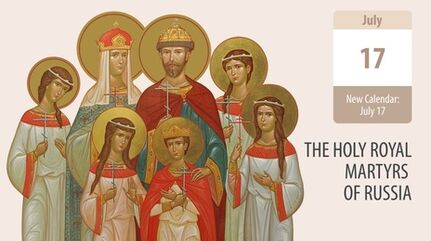
17 July marks the commemoration of the Passion-bearing Tsar Nicholas II, Tsarina Alexandra, Tsarevich Alexei, the Grand Duchesses Olga, Tatiana, Maria, Anastasia, and the Righteous Passion-bearer and Physician Eugene (1918).
He is remembered as one of the few heads of the Russian Church who openly opposed the Tsar for his treatment of dissent and the lawlessness of the Oprichnina rule.
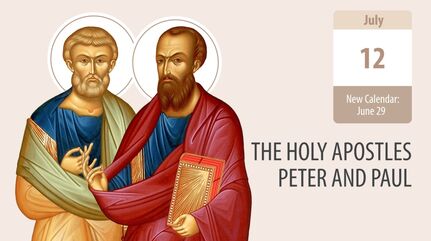
On July 12 in the Belarussian Orthodox Church, the faithful celebrate the Feast of Saints Peter and Paul - the Holy Apostles.
St. Paisios of the Holy Mountain is known to many believers. The Orthodox Church canonised him as a saint on January 13, 2015. We dwell on the life of St. Paisios and the miraculous help that people receive through his holy prayers.
Saints Sergius and Herman of Valaam are revered fathers, miracle workers, and missionaries who ventured to Rus’ in the 10th century, even before its conversion to Christianity. What do we know about them? Which documents recount their lives?
In the 1840s, Optina Monastery faced a shortage of coachmen for the 70-kilometre route to Kaluga and struggled to accommodate all the visitors in its monastery hotels. Contemporaries referred to Optina as a “spiritual sanatorium.”
Of the many saints commemorated in the Orthodox Church throughout the liturgical year, two are very unusual ones - Saints Peter and Fevronia. In Belarussian Orthodox Church, we celebrate their feast day on July 8th.
Born to a single family, all seven brothers served as soldiers in the Roman army. These kinsmen battled alongside the Greeks, pushing back the invading Scythians.
In 1532 a peasant couple in the village of Verkola welcomed a son, Artemius. His parents raised him to know the Christian faith and to live in obedience. From his earliest years, Artemius was gentle and quick to listen.
Alban the Protomartyr of Britain lived in ancient Verulamium, now Saint Albans, in the northwest of London. Though his origins and occupation remain a mystery, ancient frescoes and seals offer glimpses of the man.
Hieromartyr Eusebius, Bishop of Samosata, lived as a true follower of Christ and drew the hatred and fury of the Arians. He kept safe the synodal decree electing Archbishop Meletius to the See of Antioch.
The future saint was born on 28 February 1868 into a peasant family residing in Russian village and was baptised with the name Gerasim.
Young Julian came from a mixed household: his father was a distinguished pagan senator, his mother a devout Christian. The martyr's birthplace was Cilicia, but after his father's death, he moved with his mother to Tarsus.
Saints Innas, Pinnas, and Rimmas came from northern Scythia. They lived in the first century, and by God’s guiding hand, they received instruction in the Christian faith from the holy Apostle Andrew, the First-Called.
Jude Thaddeus dedicated his life to spreading the Gospel, venturing into the wildest pagan territories. Tirelessly, he journeyed across rivers, mountains, and deserts, planting seeds of faith in hearts from bustling cities to remote villages.
Saint Paisius was born to a Christian family in Egypt. His parents always shared what they had with those in need. Thus, from his earliest years, the boy witnessed firsthand a life of goodness and compassion.