We use cookies to analyze and improve the website and your user experience. By clicking "Accept," you agree to our Cookie Policy.
The service of pious rulers seems to be the most arduous and rocky path to achieving holiness. Pious Demetrios Donskoy managed to unite his homeland on a truly solid spiritual foundation.
He stood at the origin of cenobitic monasticism, the receiver of the monastic rule from an angel, and set an example in resisting temptations and enemy attacks.
As we commemorate this saint on his feast day, we magnify him for his exceptional humility and obedience with which he overcame the enemy’s temptations and defeated his plans.
The church hymns in his honour extol him for his spiritual strength, which rendered devils helpless, and for his brilliant faith, which illuminated the lives of those around him.
The Church Slavonic language - in which we worship today - is the fruit of their good works. They laid the groundwork for the Slavic peoples' cultural and spiritual life.
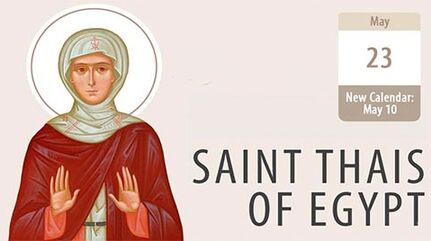
Saint Thais' change of heart occurred on the final day of her life, teaching us how significant repentance is and how precious it is in the eyes of the Lord.
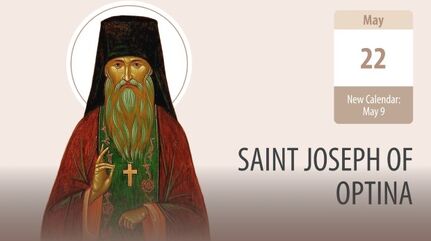
Saint Joseph of Optina lived with such deep reverence, and his gentle silence before God was so blissful, that even a fleeting, heavenly smile would draw hearts close to him. No one could fail to love him.
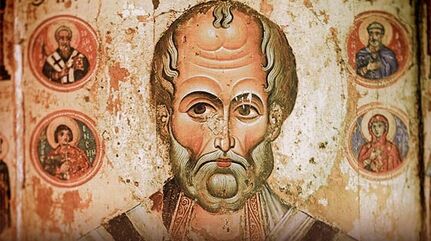
In today's hymns, he is lauded as an example of faith and a teacher of humility. What do these qualities mean for us today, and what can we learn from Saint Nicholas the Wonderworker?
Saint Nicholas the Wonderworker embodies the Good Shepherd, dedicating the whole of himself to the salvation of his sheep, becoming all things to all, ready to lay down his life for his flock.
Underneath all his virtues was his undying love for God. "Beloved, let us love one another, for love is of God," he exhorts every Christian, and his entire life reflects this message.
Love stood firm on Golgotha; Love conquered death; Love abides forever. It was this very Love that the apostle and evangelist John the Theologian proclaimed throughout his earthly life.
He is a beloved saint among the Orthodox of Ukraine, Russia and Belarus. His name was written in gold in the history of the Pochaev Lavra we honour him as a defender of the faith.
With the purity of her spirit, she enlightened the hearts of many. Pagans who came in touch with her found Christ and became Christians.
The venerable Theodosius lived in the eleventh century, shining among the saints of the Russian church as a father of monasticism in Russia, a model of ascetic living, and a religious writer, whose prayer for all Christians is still remembered…
An ancient chronicler thus describes the nature of their exploit: "They allowed themselves to be murdered by their older brother Svyatopolk vying for the princely throne. They chose not to raise their hand to their brother."
St Athanasius was a man of deep religious devotion, great honesty, strong resolve, fearless, and bold in defending the truth. His writings still serve today as a source of moral guidance and the principles of Orthodox faith.
How can we keep our faith in a rapidly secularizing world? How do we resist the temptations of ideas that promise quick solutions to the world’s problems? With his life and teachings, he answered many of these questions and brought thousands…
Saint Amphilochius is known, loved, and revered not only within the Pochaev Lavra but far beyond its walls. His ascetic life, steadfast faith and boundless love, mercy, and compassion for all earned him his renown.
This gifted speaker, deep thinker and Bible teacher, this steadfast monk, scholar, poet and speaker — widely known as the "Russian Chrysostom" — knew the Scriptures and the early Church Fathers like few others.
In the tumultuous times of the Russian Revolution, Saint Hilarion acted in step with the Spirit by persisting in his service to God and the Church and disregarding the pains and perils of this choice.