We use cookies to analyze and improve the website and your user experience. By clicking "Accept," you agree to our Cookie Policy.
Searching for inspiration in your faith journey? Let the story of St Paraskeva’s miracles, compassion, and unfailing confession move you to deeper trust in God and greater love for those in need.
A woman of privilege, Olympias chose a life of sacrificial love, giving her fortune to the poor and sick. Let her courage and deep trust in God inspire you to pursue charity and hope, even during challenging times.
Journey with young Christina as her search for truth leads to faith, courage in persecution, and miracles that inspire thousands. Let her story move you to find strength and purpose in God.
Witness the final days of the Royal Martyrs through moving eyewitness accounts. Their steadfastness in suffering and quiet faith offer a deeper look at true Christian sacrifice in the face of cruelty.
Step into the story of St Nicodemus of Mount Athos, whose discipline and practical teachings touched countless lives. Discover how his wisdom on prayer and repentance brings clarity and renewal for seekers today.
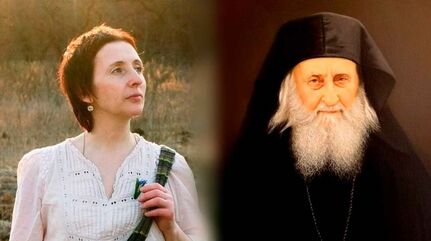
These words were spoken to me by Ekaterina Polyakova. She is the mother of five children, the daughter of an artist, the wife of an iconographer, and an English teacher.
His humility and perseverance in the desert offer timeless wisdom. Let Saint Sisoy's example of mercy, honesty, and trust in God’s goodness show you how to find light and peace even amid weakness and uncertainty.
The Iconoclastic heresy swept through the Byzantine Empire in the seventh century. Emperor Leo III the Isaurian ascended the throne and initiated persecutions against the veneration of icons.
Those heartfelt hymns guide generations. Discover the profound journey behind the Great Canon of Repentance and learn how St Andrew of Crete’s works can transform your spiritual life and deepen your relationship with God.
Saint John of Shanghai kindled the flame of true faith in the hearts of people from diverse nationalities. His strictness towards himself and boundless love for people around him revealed a great saint in this small, stooped figure.
Encounter the extraordinary life of St Maximus the Greek, who transformed from renowned scholar to unjust prisoner and spiritual mentor. Let his life inspire you to seek truth and serve others with courage and purpose.
The Most Holy Theotokos, the Virgin Mary, is glorified both on earth and in the heavenly realms. No Orthodox service is complete without the well-known hymn “It Is Truly Meet” dedicated to the Most Pure.
Standing before this icon, the faithful reveal to the Mother of God their most heartfelt petitions, and deep confidence and faith in Her help and intercession at the most trying moments in their lives and in the history of their land.
St Seraphim’s humility, miracles, and warmth transformed Russian monasticism and continue to touch believers worldwide. Find out how his example can enrich your spiritual journey and deepen your trust in God.
Born to a single family, all seven brothers served as soldiers in the Roman army. These kinsmen battled alongside the Greeks, pushing back the invading Scythians.
In 1532 a peasant couple in the village of Verkola welcomed a son, Artemius. His parents raised him to know the Christian faith and to live in obedience. From his earliest years, Artemius was gentle and quick to listen.
Hieromartyr Eusebius, Bishop of Samosata, lived as a true follower of Christ and drew the hatred and fury of the Arians. He kept safe the synodal decree electing Archbishop Meletius to the See of Antioch.
Young Julian came from a mixed household: his father was a distinguished pagan senator, his mother a devout Christian. The martyr's birthplace was Cilicia, but after his father's death, he moved with his mother to Tarsus.
Saints Innas, Pinnas, and Rimmas came from northern Scythia. They lived in the first century, and by God’s guiding hand, they received instruction in the Christian faith from the holy Apostle Andrew, the First-Called.
Saint Paisius was born to a Christian family in Egypt. His parents always shared what they had with those in need. Thus, from his earliest years, the boy witnessed firsthand a life of goodness and compassion.