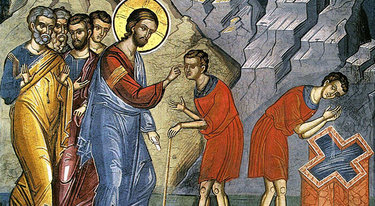
O holy hierarch of Christ, sacred offering to God, noble glory of the confessors, bright jewel of the Orthodox Church; O glory of the land of Crimea and good and merciful physician: pray for us who lovingly keep your holy memory, that we may be delivered from illness and sorrow.
Sticheron at "Lord, I have cried", tone 4
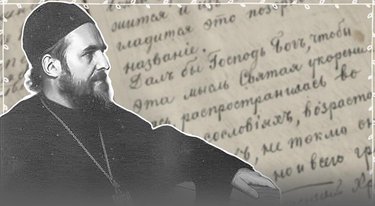
When Valentin Voino-Yasenetsky became a monk, the Church gave him the name Luke, after the Apostle and Evangelist whom Saint Paul called "the beloved physician" in his greeting to the Church in Colossae. The title fits Saint Luke of Crimea remarkably well. A confessor of the twentieth century, he endured exile, prison and torture – and was later awarded the Stalin Prize. He was a surgeon who saved thousands of lives, a brilliant physician, a gifted preacher, a towering spiritual figure and a Christian of immense courage, honesty and fearless faith.
What impression did he make on those who saw him after eleven years of exile, illness, persecution, poverty, hunger, slander, denunciations and the brutal "conveyor-belt" interrogations of the Soviet security services? One contemporary left this portrait:
"A very tall man entered the hall, wearing glasses. His grey hair fell to his shoulders. A light, transparent, white beard, like lace, rested on his chest. His lips were pressed tightly beneath his moustache. Large white hands fingered black, matt prayer beads. He walked slowly into the hall and sat in the front row. The chairman asked him to take a seat on the platform. He rose, went up, and sat in the chair offered to him. It was Professor Valentin Feliksovich Voino-Yasenetsky…"
V. A. Polyakov, Candidate of Medical Sciences, Tambov, 1944
This man, loved by God and by the people, once wrote to his family:
"I have come to love suffering, because it cleanses the soul so wonderfully. I must tell you that when I walked a truly terrible road, carrying Christ's heavy burden, it did not feel heavy at all. On the contrary, that path brought me joy. I felt, quite truly and tangibly, that the Lord Jesus Christ Himself was walking beside me and helping me to bear my burden and my cross."

Saint Luke's parents: Feliks Stanislavovich and Maria Dmitrievna
On his father's side, Saint Luke came from the old Belarusian noble family of the Yasenetsky-Voinos, known from the sixteenth century. In time, the family fell on hard times. His grandfather, Stanislav Valentinovich Yasenetsky-Voino, worked as a miller in a village in Mogilev Province.
His father, Feliks Stanislavovich, was a devout Catholic. He attended church, prayed for long periods at home and had a soul of rare purity. He saw good in everyone and trusted people completely. He gave to charitable causes, sent money to help persecuted Christians in Bessarabia and helped buy medicine for the poor and for prisoners. Gentle by nature, he never tried to impose his beliefs.
At home, the spiritual atmosphere was shaped above all by Valentin's mother, Maria Dmitrievna, who had been raised in the Orthodox faith. She prayed faithfully at home, and her faith showed itself in practical mercy. She sent home-baked bread to prisoners, and during the First World War she boiled milk at home for the wounded.

Coat of arms of the Yasenetsky-Voino family
Valentin, as the future saint was baptised, was born in Kerch. He was the fourth of five children, and the family's early years were happy and carefree. When he was twelve, they moved to Kiev. Alongside grammar school, Valentin attended art school and prepared to become an artist.
After leaving school, he had to choose his path. Later, Saint Luke wrote:
"It was then that my faith first made itself felt. Every day, sometimes twice a day, I went to the Kiev Caves Lavra. I often stopped in churches, and after each visit I would come home and sketch what I had seen – people praying, pilgrims from far away. By then I already knew what kind of art I wanted to create… After leaving grammar school, I decided to enter the St Petersburg Academy of Arts. But in the middle of the entrance examination a troubling thought came to me: was I choosing the right path? After a moment's hesitation, I realised that I had no right simply to do what I wanted. I had a duty to do what would be useful to suffering people. From the Academy I sent my mother a telegram saying that I wished to enter the medical faculty."

Valentin Voino-Yasenetsky after leaving grammar school in Kiev
In 1898, aged twenty-one, Valentin entered the medical faculty of Kiev University. He excelled, served as class representative and showed a particular gift for anatomy.
"My talent for drawing and my appreciation of form grew into a love of anatomy," he later wrote. "From a failed artist, I became an artist in anatomy and surgery. When we received our diplomas, my classmates asked what I planned to do. I told them I was going to be a country doctor. They stared at me and said, "What? You are going to be a local doctor? But you are a born scholar!" It upset me that they had completely missed the point. I had studied medicine only so that I could spend my life as a village doctor, a doctor for peasants, helping the poor."
He first worked at the Red Cross hospital in Kiev. In 1904, at the age of twenty-seven, he left for the Russo-Japanese War and joined an evacuation hospital in Chita. There he headed the surgical department and gained enormous experience, operating on injuries to bones, joints and the skull. In Chita he married a nurse, Anna Vasilyevna Lanskaya.
When the war ended, the young couple moved to the small town of Ardatov in Simbirsk Province, where the district hospital needed a surgeon. Valentin worked at once as surgeon, general physician, paediatrician and obstetrician. From early morning until late at night he saw patients, performed operations and travelled to the surrounding villages. Wherever he served – in Saratov, Kursk, Yaroslavl and beyond – word spread of a remarkable doctor who turned no one away.
From the beginning, Voino-Yasenetsky was also a serious researcher. His keen mind sought the root causes of disease, especially severe suppurative infections.

Valentin Feliksovich consulting with his wife, Anna Vasilyevna Voino-Yasenetskaya, assisting him
In his first years of medical practice, the young doctor studied local anaesthesia in depth and published several papers on his findings. This work led to his book Regional Anaesthesia, which he illustrated himself with great skill. Many regarded it as the best Russian work of its kind that year, and it earned him the Warsaw University Prize. In 1916, Valentin successfully defended his thesis on the subject and received the degree of Doctor of Medicine.
At the beginning of 1917, Dr Voino-Yasenetsky was chosen from among several candidates to become chief doctor of the Tashkent City Hospital. By then the Civil War was bringing in streams of wounded men. Orderlies regularly woke the head doctor in the middle of the night to operate. He never complained and never refused to help. In 1919 he became a professor at Tashkent University.
At the same time, Anna Vasilyevna fell gravely ill with pulmonary tuberculosis. Her health collapsed after the secret police arrested her husband. A mortuary attendant at the hospital had denounced him for secretly treating a badly wounded Cossack captain, V. T. Komarchev, and refusing to hand him over to the Bolsheviks. Although Valentin was eventually released, Anna never recovered from the shock. She died soon afterwards, leaving him with four small children.
A hospital nurse, Sofya Sergeyevna Beletskaya, took the children in and cared for them without hesitation. Saint Luke later recalled:
"She and the children were thrown out of my chief doctor's flat and moved into a tiny room like a cupboard. They managed only because the children built bunk beds, turning the little space into a two-level room. Sofya remained a nurse and lived with the children on her small wage. I shall always remember the great kindness Sofya Sergeyevna showed my children."

Bishop Luke of Tashkent and Turkestan
During the terrible years of the revolution, the Bolsheviks unleashed savage persecution against the Church. Through it all, Valentin Feliksovich proved himself a true Christian. He attended the services faithfully and often gave talks on Holy Scripture.
At one diocesan meeting, the young doctor made an impassioned speech that revealed the depth of his faith. Archbishop Innokenty of Tashkent was so moved that he said, "Doctor, you ought to be a priest." Valentin, who had never considered the priesthood, took these words as a call from God. In 1921 he was ordained deacon and, a week later, priest, in Tashkent Cathedral.
After three years as a priest, he became a monk and received the name Luke, in honour of the Apostle and Evangelist Luke – iconographer, healer and physician. Then, at the height of the persecution, he was consecrated Bishop of Tashkent and Turkestan.
In 1923, Bishop Luke was arrested for the first time and exiled to Siberia. He returned to Tashkent three years later, only to be arrested again in 1930 and sentenced to another three years of exile. Once free, he went back to Tashkent and resumed his medical work. Among the achievements of these years was Essays on Purulent Surgery, a book still valued by physicians. In 1936, the state awarded him the degree of Doctor of Medical Sciences for his groundbreaking research.

Bishop Luke, Tashkent, NKVD prison, 1939
The authorities arrested him again in 1937. He spent more than two years in prison, enduring brutal torture during the investigation. His captors interrogated him without pause, at times keeping him awake under questioning for up to thirteen days. They beat him and threw him into solitary confinement, although he was already sixty.
"I can admit to being a counter-revolutionary only insofar as my preaching of the Gospel makes me one," he wrote. "I have never been an active counter-revolutionary, nor a participant in the ridiculous "priestly counter-revolution". I am deeply insulted that the investigation, and the false witnesses who denounce me, should cast me as a flea on the body of the colossus of Soviet power. For twenty years under Soviet rule I have been wholly absorbed in scientific surgical work and in pure service to the Church, far removed from any anti-Soviet agitation."
Refusing to accept the lies forced upon him, he went on hunger strike for eighteen days. "They keep telling me to take off my cassock, but I will never do that," he told his cellmates. "I will wear this robe until the day I die. I help people as a doctor, and I help them as a servant of the Church."
In 1940, he was sentenced to five years of exile in the Krasnoyarsk region. When war broke out, the bishop offered the authorities his services as a doctor, and in 1941 he became a consultant to the Krasnoyarsk hospitals. A year later his term of exile ended. He was raised to the rank of archbishop and placed in charge of the Krasnoyarsk diocese, which at that time had not a single functioning church. Through his efforts, the diocese saw its first church reopened in 1943. Soon afterwards he was sent to Tambov.

Archbishop Luke with clergy in Tambov's Intercession Cathedral, 1944 – 1946
Archbishop Innokenty Kalininsky (Leoforov), who served as Bishop Luke's diocesan secretary in Tambov, remembered him as a man of radical truthfulness:
"He was a very truthful man. Bishop Luke thought everyone around him was the same. But people, as you know, are not always like that… When he was leaving Tambov, I accompanied him by train to Michurinsk. We were alone in the carriage, and he asked me:
"Tell me, what is the greatest failing I should avoid?"
"Your Grace, please do not trust gossips," I said. "Because you listened to liars, Your Eminence, you sometimes punished people who were completely innocent."
"Really?" he said, surprised. Then, after a moment, he added: "I simply cannot change that. I cannot help trusting people.""

In Tambov, Archbishop Luke worked hard to have the city cathedral returned to the Church. One day, the chairman of the regional council invited him to his office. Wishing to do him a favour, he asked:
"What reward should I give you for your wonderful work in the hospital?"
"Open the city cathedral."
"Oh no. You will never see the cathedral."
"Then I want nothing else from you," the archbishop replied, and walked out.
A similar scene took place with a new regional chairman. At the end of 1945, the archbishop and his secretary were invited to the regional offices to receive medals for their work. After the awards had been presented, the chairman made a speech. He noted that the professor's work with the military hospitals had ended when the front moved west in 1944, but said he hoped the doctor would continue to share his vast experience with the city's surgeons.
Archbishop Luke replied:
"I have taught doctors what I know, and I am ready to go on teaching them. I brought hundreds, perhaps thousands, of wounded men back to life and health. I could have helped many more if you" – he stressed the word, clearly meaning the authorities as a whole – "had not arrested me without cause and dragged me through prisons and exile for eleven years. Think how much time was lost, and how many people died who could have been saved – and that was no fault of mine."
The officials were stunned. For a moment, a heavy silence filled the stage and the hall. The chairman, trying to recover, began to say that the past should be forgotten and that everyone should live for the present and the future. But Bishop Luke's deep voice cut in once more:
"Oh no. Forgive me, but I will never forget it."

The works of Saint Luke (Voino-Yasenetsky)
By this time, years of hardship and exhausting work were taking their toll. Archbishop Luke was losing his sight, and his heart was failing more often.
In 1946, he received the Stalin Prize, First Class, for his outstanding medical research. He gave almost all the prize money to children who had suffered in the war.
That same year, he was appointed to the diocese of Crimea. At first, he combined his duties as bishop with medical practice. "No matter how much my flock in Tambov wept, no matter how much they begged the Church authorities to let me stay, I had to go to Simferopol," he wrote. "This was surely God's will, because I am very much needed here. I have a ruined diocese to rebuild."
He laboured tirelessly in Christ's vineyard, a task that demanded immense courage under communist rule. As bishop, he was a constant thorn in the side of the authorities. He did what the Church needed, often ignoring the state official appointed to supervise religious affairs. Whenever the archbishop approved something, the official tried to cancel it, and the conflict dragged on for years.
"Governing the Church is pure torment," he complained to his eldest son, Mikhail, in 1960. "The state commissioner, a bitter enemy of Christ's Church, keeps stealing my episcopal authority and meddling in our internal affairs. He has worn me out completely."
Even so, Saint Luke kept looking for ways to restore ruined churches and bring the faithful back into them.

By the sea
Over thirty-eight years as a priest and bishop, Saint Luke preached 1,250 sermons. At least 750 were written down, filling twelve large volumes. The council of the Moscow Theological Academy called the collection "an exceptional phenomenon in contemporary church life" and made him an honorary member.
Archbishop Mikhail of Kuibyshev wrote that Saint Luke's sermons were "simple, sincere, direct and original". Quoting from his Homily on Great Friday, he observed that after nineteen centuries of Christian preaching, it might seem impossible to say anything new. Yet Archbishop Luke's words, he said, still moved the heart with freshness:
"The Lord was the first to take up the Cross, the most terrible Cross; after Him, many martyrs took up lesser crosses, though at times terrible ones too… Shall we not take up our own crosses and follow Christ?"
The elderly archbishop filled his working days to the brim. He rose at seven. The early Divine Liturgy lasted from eight until eleven. Over a very simple breakfast, his secretary, Evgeniya Pavlovna Leikfeld, read aloud two chapters from the Old Testament and two from the New. Then came diocesan work, all conducted from his flat: instructions from the Patriarch, correspondence, meetings with clergy, appointments and transfers, complaints from the authorities. He read newspapers and books until lunch, then rested.
From four to five, he received patients. In the evening, he walked by the River Salgir, often with his grandnephews Georgy and Nikolay, telling them stories from the Bible. Many years later, both men remembered how deeply those informal lessons had stayed with them. After the walk, Vladyka Luke returned to his desk and worked on sermons, letters and surgical books until eleven at night.
His feast days were no less demanding. "I am writing to you late in the evening," he told Mikhail in 1951. "I have just returned from Dzhankoi, a hundred kilometres from here, where I served for the Feast of the Protection of the Mother of God. The Liturgy and sermon took four hours, and I spent another whole hour blessing the people. I am tired. I did not sleep at all last night."
In another letter he wrote: "The work is heavy, especially now, during Great Lent. My service lasted five hours. I get very tired…"

A rare amateur photograph of Bishop Luke in the last years of his life, walking along the Crimean coast
Eventually, the secret police placed him under close surveillance. They opened his letters and tapped his telephone. Agents even appeared in church with cameras, photographing everyone who attended. The saint seemed to pay no attention. He simply continued to serve.
In a sermon in 1954, he said:
"I know that the sudden burst of anti-religious propaganda troubles many of you and makes you sad… Do not worry. Let it pass. It has nothing to do with you… Christ's little flock, His true flock, cannot be harmed by any propaganda."
His courage, direct preaching and firm action unsettled some unbelieving doctors and worried the regional communist leadership. But the same qualities drew many people to him. Believers and unbelieving patients alike spoke of him with love and gratitude. Students, teachers, engineers and librarians slipped quietly into church to hear him preach. He was respected by people of other faiths as well, especially by Jews. On great feasts, the warden of the Simferopol synagogue – a man Bishop Luke had once saved – would come to greet the Orthodox archbishop-doctor.
Those close to him also remembered his humility and indifference to possessions. In 1951, Vladyka travelled to Odessa, where the Patriarch was on holiday. Sofya Sergeyevna Beletskaya wrote to the archbishop's daughter:
"Sadly, your father is again very poorly dressed: an old canvas cassock and a very old, cheap undercassock. We had to wash them both for his trip to see the Patriarch. All the senior clergy here are dressed magnificently, in expensive, beautiful, perfectly made vestments, while your wonderful father is dressed worse than anyone. It is quite upsetting…"
Even in Crimea, Saint Luke continued to practise medicine as far as he was allowed. The authorities banned him from lecturing at the Crimean Medical Institute because he refused, absolutely, to wear civilian clothes instead of his cassock. Undeterred, he began seeing patients at home. Doctors regularly called him in for difficult cases, and the Simferopol Military Hospital invited him to consult.
By 1955, however, he had to give up medical practice. He had become almost completely blind and could no longer examine patients.
Like his patron, the Apostle Luke, he was both physician and heir to the apostolic calling. He preached the Gospel of Christ not only in church, but in prisons and exile, to friends and enemies alike. The faithful supported him and wished him well; false brethren slandered and betrayed him. Still he continued.
"I consider it my chief duty, everywhere and always, to preach Christ," he said. He held to that principle until the end of his life. Even after losing his sight, Archbishop Luke continued to govern the Simferopol diocese. He still received patients, astonishing local doctors by diagnosing illnesses accurately without being able to see.
Archbishop Luke died on 11 June 1961, the Feast of All Saints of Russia. Defying police orders, a huge crowd gathered to sing the Trisagion as his coffin was carried through the streets to the city cemetery. Believers came from across the country to bid him farewell.

On 18 March 1996, the relics of Saint Luke were uncovered in Simferopol. Two days later, they were carried in a great procession from the cemetery to Holy Trinity Cathedral.
Saint Luke (Voino-Yasenetsky) was formally cleared of all charges only in April 2000. That August, the Bishops' Council of the Russian Orthodox Church glorified him as a confessor among the New Martyrs and Confessors of Russia. He is also venerated by other Local Churches, especially the Church of Greece.
Saint Luke proved to be a precious vessel of God's grace. His bold service to God and to suffering humanity, and the humble way he carried his cross, led him to true holiness. Let us ask for his prayers, that in this season of Great Lent the Lord may heal our souls and, if He wills, grant strength and health to our bodies.

O Saint Luke, blessed of God, who in prisons and exiles tasted daily sickness and sorrow, and loved to suffer for Christ's sake: melting the winter of lies with the warmth of God's grace, you now dwell in glory with Christ, the Unsetting Light. Therefore we pray: heal and enlighten our souls through your prayers.
Sticheron at "Lord, I have cried", tone 8
This article was prepared by the staff of obitel-minsk.ru.
Photographs from the internet
Saint Luke (Voino-Yasenetsky) told the story of his life in an autobiography later published as "Purified through Suffering". In these remarkably candid memoirs, he is unsparingly honest about himself and unafraid to acknowledge his own frailty, offering readers a rare glimpse into his inner life.
A few years ago, we translated this book into English. You can download the e-book in exchange for a donation here: https://obitel-minsk.org/en/ebook-saint-luke
Sources:
1. I Have Come to Love Suffering / St Luke (Voino-Yasenetsky). Minsk: Terirem, 2017.
2. "On the time and place of St Luke of Crimea's residence in Kerch." News - Diocese of Feodosia.
3. "Full Biography of St Luke of Crimea (Voino-Yasenetsky)." New Martyrs and Confessors of the Pereslavl Diocese.
4. "Life of the Saint." Holy Trinity Convent, Simferopol.
5. "St Luke of Simferopol: A Saint in the Land of the Soviets." Miloserdie.ru.
6. "St Luke Voino-Yasenetsky: Surgeon, Monk, Scientist." Church of St Luke, Archbishop of Simferopol.