Inside the Church of St Nicholas at St Elisabeth Convent, a nun carefully wipes each icon clean. As she reaches the icon of the Mother of God “Seeker of the Lost”, she notices candles left on its case — someone, it seems, wished to offer their gift to the Theotokos. This icon had only recently come to the monastery, but its story is already taking root. A small cross also hangs there, left by someone whose prayers were answered — a quiet token of gratitude.
Natalia Zenkova, who leads the restoration workshop, tells the remarkable story of how the icon arrived at the convent.

- Natalia, we have heard in the church shop that this icon has a story. Will you tell us?
Of course. It turned up in an antique shop. It was in a sorry state and needed a lot of work. A doctor — who wishes to keep his name private — simply wanted to rescue it, so he bought it and brought it straight to our workshop.
The icon’s paint layer had blistered badly. At first glance, you might not have noticed, but a gentle tap on the surface revealed a hollow bubble beneath. That fragile surface might have flaked away at any moment, taking precious fragments of the sacred image with it. It was clear the icon needed our help, and quickly. We set to work: glued and strengthened the paint, and carefully removed old layers of varnish and dirt. Slowly, the image came to life and began to shine once more.

During this work, the man who brought us the icon faced deep personal struggles. He turned to the Mother of God in prayer, pleading for Her help. When relief came, he checked the date and discovered something remarkable: his troubles had lifted on 18 February, the feast of the icon "Seeker of the Lost". Moved by gratitude, he decided to donate the icon to the monastery, so that anyone in need of Our Lady’s help might visit St Nicholas’ Church, stand before the icon, and ask Her for mercy. Father Andrey Lemeshonok gladly gave his blessing to this act of faith.
Soon after, gifts from parishioners started arriving for the icon.
- What can you tell us about the icon as a piece of art?
It probably comes from the icon-painting tradition of Central Russia, painted with great skill by a master in the nineteenth century. From what I know of the man who bought it, the image touched him deeply. After all, how do we pick a particular icon for prayer? Some images call out to us, others do not. Every heart has its own favourites. Some are drawn to folk icons — their style is simple, even naïve, but they take you right back to your childhood — perhaps just like the one your grandmother had. Others connect with works from the great icon schools.
- Do you often see icons from antique shops in your workshop?
People bring in icons all the time, and we hardly ever know how they first came into someone’s hands. In my line of work, I often visit such shops, just for the pleasure of seeing rare and old icons. Sadly, space is often tight, and you will see these sacred objects jammed up against all sorts of unsuitable things…
- So you saved this one from damage, and also from a place that was never really right for it?
Exactly. All sorts pass through antique shops. Some visitors — true believers — can spot a sacred object in a pile. They sense the depth and meaning in a single glance. But there are others, too. Some buy icons to sell on, or simply to make a profit — or to tuck them away in private collections at home.
In other words, they do not treat it as something sacred. But then, who can really know what is in a person’s heart? Perhaps they are, in their own way, making their way towards God. After all, when someone buys an icon, it must stir something in their soul. It tells me that beauty still speaks to them.

The icon “Seeker of the Lost”
- Why was the “Seeker of the Lost” icon placed in St Nicholas’ Church? How do you decide where to put an icon in the first place?
We must respect the chronology of icon painting when decorating churches. Both our churches — the Reigning Icon of the Mother of God and St Elisabeth — have all new icons, painted by hand in our icon studio. What gives St Nicholas’ Church a special character of its own? It blends a modern iconostasis with icons both new and old, from different schools and periods. The “Seeker of the Lost” fits here perfectly, matching the church in size, meaning and artistry.
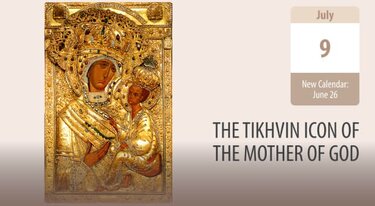
I heard the sisters welcomed this icon warmly, not least because the monastery never had one like it before. We have many depictions of the Mother of God, of course, but some hold a special place in people’s hearts: “Kazanskaya”, “Tikhvin”, “Vladimir”, “Feodorovskaya”. “Seeker of the Lost” now joins these honoured images. Those feeling ground down by life’s troubles, or lost altogether — people in such straits often pray before it.
- Last time we spoke, you mentioned you have a feel for which restorer is right for each icon. How did that work with this one?
Ah, yes. The moment I took this icon in my hands, I knew I had to be the one to work on it. Something about the image's beauty, combined with its story — rescued by purchase — touched me deeply.
The restoration took about three months. It arrived without a kiot (a protective case), so it had started to deteriorate. An icon needs just the right temperature and humidity; a case gives that protection. Thankfully, the man who saved it commissioned a new kiot for this icon.
- You also said restoration is a bit like bomb disposal — one slip and you might ruin everything. Was this a hard piece to restore? Did you run into any trouble?
Some jobs flow smoothly from start to finish. This one was exactly like that — everything went right from the start, and I found real joy in the work.
Other times, unexpected issues can crop up. You might glue down paint layers, only to watch a blister refuse to flatten, or new cracks start to spread. Before you know it, the problem has spread, one thing leading to another, and you realise the job is going to take far more time and effort than you first thought.

But with this icon, everything worked first time. I am so glad it is now in the monastery. Often, after spending so long with an icon, I feel sad to let it go. This time, though, it is different. I parted with it, yes — but it is still with us, and now anyone can come and stand before it.
- We touched on this earlier when we spoke about antique shops. Do you believe icons belong in churches? These days, you find so many of them in galleries, or even in old churches that now serve as museums.
I used to see it all in black and white. I felt certain that icons should belong only in churches. They were for prayer — sacred things. But once, I heard Father Dmitry Smirnov speak. He spoke of the Russian icon hall in the Tretyakov Gallery, where Rublev's works hang. The staff working there became believers just by being around these icons. That is the power they wield. The attendants spoke of this themselves.
His words made me see things differently. I believe now that someone who comes to a museum — those who stand before a Rublev icon, face to face with its beauty, its grandeur — might feel drawn to God right there. An icon, after all, is a window onto the spiritual world.

Icons by Rublev
During those faithless years when churches shut their doors, people could still meet the spiritual world inside a museum. And even now, visitors to exhibitions, galleries, or simply those who come across icons in life, might discover faith.
You never know when or where an icon might touch someone’s soul. For some, the museum might be their only chance to encounter such beauty, with God just a step behind. Of course, this does not change the truth that icons truly belong in church — that they were made for prayer. Believers who visit museums feel moved to cross themselves before an icon; they approach quietly and bow, because for them it remains a holy object. But since we cannot turn back the clock…
- …perhaps the Lord can bring good out of bad?
He can. And perhaps there is a reason for all of this.
An icon’s journey is a fascinating thing. Working in the workshop taught me that they often seem to choose where they should go. Once, people brought us a magnificent church icon of extraordinary beauty. The restoration dragged on, and throughout that time we wondered where the restored image would end up. In the end a priest — the rector of a Minsk parish — came, received a blessing, and took it for his church. Now it sits there for all to venerate. The people come to it; the priest told us how deeply it moved his parishioners.
Or take the icon our nun Chionia (Efimova) brought us: it has an astonishing past. While we were still discussing restoration, someone stepped forward with funds to cover the work. That icon now rests in the Cathedral of the Saints of Belarusian Land in Zaslavl.
However much we plan, or wish, or imagine the ‘right’ place… somehow, wonderfully, the icon lands exactly where it is needed most.

Restoring the Icon of the Saviour
In the small shop at St Nicholas’ Church, a nun shares her thoughts. When the “Seeker of the Lost” icon arrived, she started gently pointing people towards it. “There is something about this icon I love,” she explains. “I feel it has a place in every person’s life. You cannot really call it a ‘favourite’, of course. You have to remember, they are all images of the Mother of God. But some icons, I suppose, speak to a person’s heart more than others. For me, this one feels very near; it is an image of the Holy Mother that gives so much help.”
A woman handing prayer notes over the counter happens to catch our conversation. A little later, she makes her way into St Nicholas’s and walks towards that very icon…
Interviewer: Olga Demidyuk
Photographs: Labourer Ioann