Close your eyes and Christmas arrives in waves: the sharp scent of pine needles and cinnamon, the velvet richness of hot chocolate on your tongue, the prickle of wool scarves against cold-flushed cheeks. Your fingers find the raised patterns on wrapped presents.
Even in a cramped studio apartment far from home, these sensations arouse something precious – that flutter in your chest when coloured lights blur through frost-edged windows, when strangers smile more readily, when the whole exhausted world seems to relax and soften.
Yet for Orthodox Christians, all this warmth represents only the surface of an ocean. The true joy of the Nativity reaches beyond what eyes can see or hands can hold. This joy is not simply bigger than worldly happiness; it is of an entirely different order – like the difference between a photograph of fire and the sun itself.
As the ancient Orthodox hymn proclaims, "Heaven and earth dance together today, for Christ is born!" This article explores what that cosmic dance means for our decidedly earthbound lives: why a birth in a forgotten corner of the Roman Empire two thousand years ago might matter to someone now. And perhaps most urgently – in a world where joy feels so fragile, ever more artificial – what does it mean to discover a happiness that death itself cannot touch?

Imagine waking up in a world where hope is a luxury you cannot afford. Where the rich get richer by stepping on your throat. Where everyone is so exhausted from just surviving that they have stopped believing things could ever get better. That was Palestine, two thousand years ago. And if you are honest, it sounds a lot like what is happening around you, or what you read on your news feed every day.
The Roman Empire ruled with an iron fist wrapped in a velvet glove of "civilisation". Take the most oppressive regime you can imagine, then give it the world’s most powerful military and a talent for crucifying dissidents along major highways as a warning to others. Local collaborators called tax collectors squeezed their own people dry, taking extra for themselves – much like a modern-day loan collector, if you could put him in the company of armed soldiers.
The people who were supposed to help, the religious leaders, were themselves struggling with impossible choices: to bend to Rome, but keep some autonomy for the people, or resist, and be destroyed. Many made compromises that looked a lot like selling out. The Pharisees made rules they hoped would help their people live more faithfully. Yet these soon became too heavy to obey in practice, but could often be stretched far enough to justify wrongs. Jesus would later call them out: "They tie up heavy, cumbersome loads and put them on other people’s shoulders, but they themselves are not willing to lift a finger to move them." The Sadducees, the priestly aristocracy, refused to believe anything supernatural like the Resurrection. Their close relationship with Rome made them look more like collaborators.
Regular people went through the motions of worship, but it had become as meaningless as mandatory attendance at a lecture where the professor just reads slides. Their prayers were little more than words thrown at a silent sky. Even the decent ones had seen their faith flutter. The Scripture tells of a priest named Zechariah – a genuinely good man who had spent his whole life serving in the temple. When an angel showed up to tell him his prayers for a child had been answered, his response was full of doubt: "How shall I know this? For I am an old man, and my wife is well advanced in years." (Luke 1:18) It is almost funny if it were not so tragic – here is a priest, in the holiest place in his religion, and yet his first instinct was unbelief.
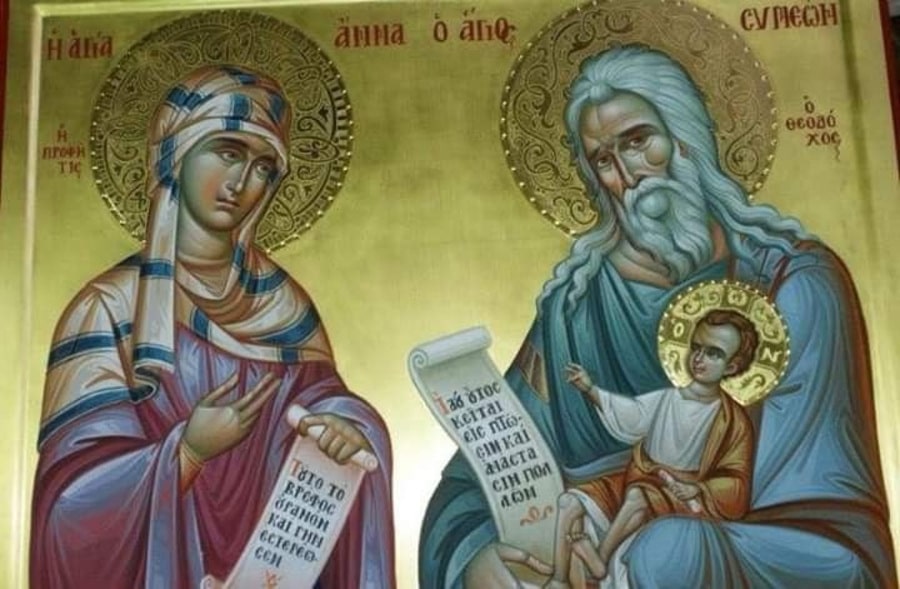
In this spiritual wasteland, a handful of odd people still kept believing. One was an old man named Simeon who hung around the temple, telling anyone who would listen that God had promised he would see the Messiah before he died. Imagine that person at the underground station or town centre with the hand-painted signs about the end being near, except he was right.
An eighty-four-year-old widow named Anna literally lived at the temple, praying and fasting constantly. Picture someone selling their flat, giving away their retirement fund, and moving into a religious building to spend every waking hour praying for the world – that was Anna. Everyone else rushing past to their jobs and dinner parties probably thought they were out of their minds.
Now here is where the story takes a turn that no one saw coming. God looked at humanity moving away from Him, at hope fading – and instead of writing us off, He did something absolutely different. He showed up. Not with armies or thunder or a hostile takeover. He came as a baby, born to a young betrothed woman, Mary, whom the Orthodox call Theotokos, or "God-bearer".
He entered the world in a barn, in a nothing town called Bethlehem. The force behind the universe, the consciousness that dreamed up galaxies, decided the solution to human despair was not to send another sign or prophet, but to take on human flesh.
The ancient texts put it like this: "The Word became flesh and made his dwelling among us." He became human. He got hungry, stubbed his toes, had his heart broken by friends, knew what it was like when family thought he was out of his mind. The book of Hebrews says he "has been tempted in every way, just as we are." Every anxiety you have felt, every temptation you have faced, every moment you have wanted to give up – He lived through it all, without ceasing to be God.
The birth of Jesus was God’s declaration that no empire is too oppressive, no religious system too corrupt, no person too far gone. The same power that spins planets chose to be vulnerable, to start over as a helpless infant, to grow up and live and die and rise – all to mend the connection between heaven and earth, between you and the infinite, and to restore our holiness.
The Nativity says that even when you cannot believe, even when you are like Zechariah standing in the holy place doubting everything, even when you are just going through the motions like everyone else – Love is already on its way, probably in a form you would never expect. It is ready to crack your world wide open with a joy that comes from beyond this world but changes everything in it.
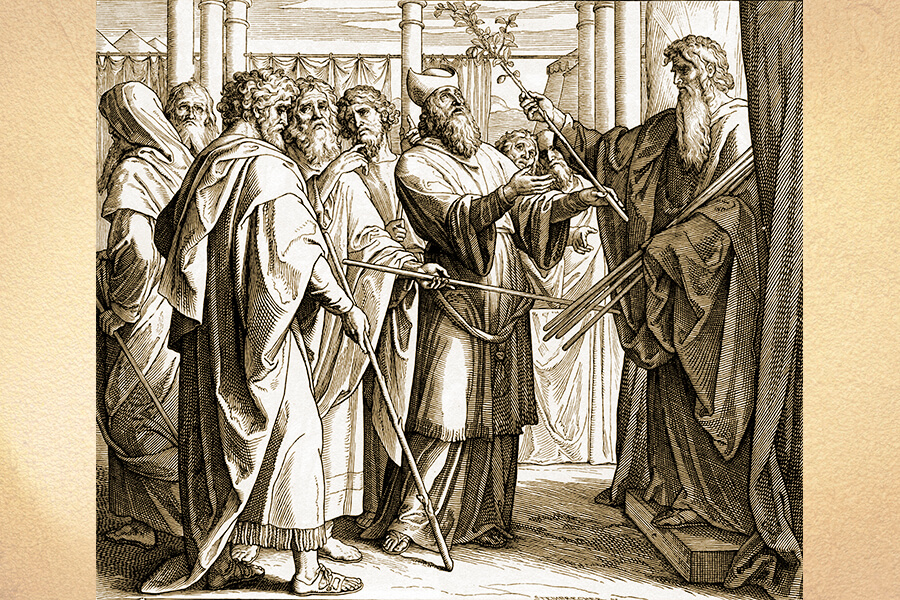
In the first-century powder keg of Palestine, many were readying themselves for a fight. In the hills outside Jerusalem, Zealot revolutionaries prepared for armed resistance. The scriptures declared, "The LORD is a man of war; The LORD is His name." (Exodus 15:3) They had seen Greek oppression thrown off within living memory of their grandparents. Why not Rome next?
Meanwhile, in desert communes near the Dead Sea, the Essenes followed the Prophet Isaiah’s command to the word – "Prepare the way of the Lord; make straight in the desert a highway for our God." (Isaiah 40:3) They withdrew from society to build communities of radical purity. Both groups were trying to solve a real problem: How do you stay faithful when the world is so corrupt? They just had the battlefield entirely wrong.
The real war – the one that would actually change everything – was being fought in the racing heartbeat of Mary, the Mother of God, in Nazareth, as an angel’s impossible words hung in the air: "You will conceive and give birth to a son." (Luke 1:31) No precedent. No safety net. Just an invitation.
The Gospel of Luke records Mary’s initial response with devastating honesty: "How will this be, since I am a virgin?" (Luke 1:34) Feel the weight of that question. In her culture, unwed pregnancy meant possible death by stoning. At minimum, it meant exile, shame, a life destroyed. The real battle was not against Rome or cosmic darkness – it was against the completely rational voice in Mary’s head screaming: "Say no. Walk away. This will ruin everything."
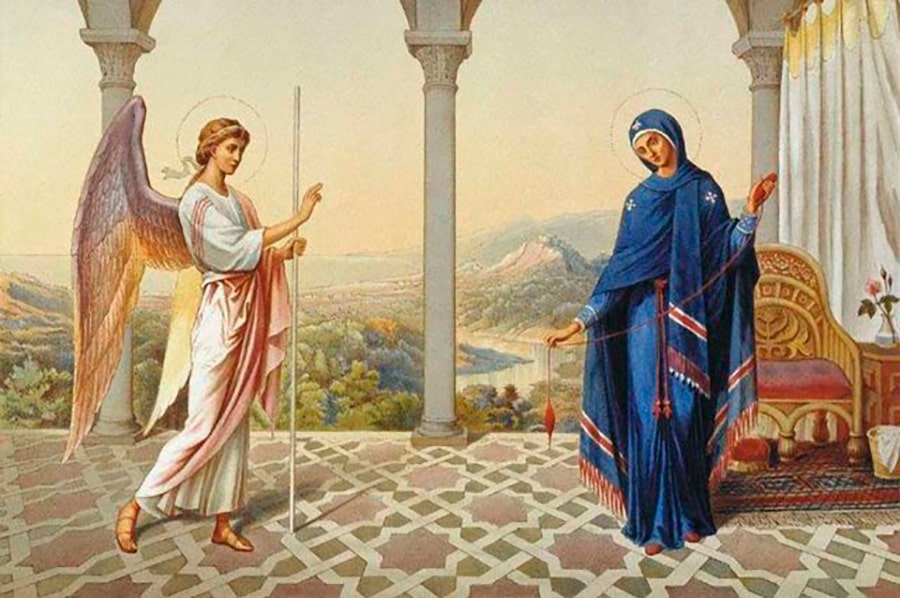
The all-powerful God chose to work through a young woman’s free choice. The Angel had brought Her God’s proposition, and was waiting for Her answer, as if heaven itself held its breath. This was not divine dictatorship; this was something far more radical – a God who insists on human partnership, who refuses to save the world without our participation.
And then there was Joseph, fighting his own war in the dark. Matthew’s Gospel tells us he was "a righteous man" who planned to "divorce her quietly" (Matthew 1:19) when he discovered Mary’s pregnancy. Feel the agony in that word "quietly" – he loved her enough to minimise her disgrace even as his heart shattered. He went to sleep that night wrestling with betrayal, confusion, and the unbearable thought that the woman he loved had lied to him.
It took an angel invading Joseph’s dreams to win that battle: "Do not be afraid to take Mary home as your wife." (Matthew 1:20) But even with angelic intervention, Joseph had to choose. He woke up the next morning with every reason to dismiss the dream as wishful thinking, to protect himself from the scandal that would follow. The neighbours would whisper. His reputation would crumble. His carpenter’s business might fail.
This is the untold battle of the Nativity – not the sanitised stable scene we have turned into greeting cards, but the brutal internal combat against every instinct of self-preservation. While Zealots planned ambushes and Essenes copied war scrolls, the real battle was being won by two young people saying "yes" to the incomprehensible.
Mary’s final answer still resounds through history: "I am the Lord’s servant. May it be unto me according to your word." (Luke 1:38) In that moment, she defeated humanity’s ancient enemies – not Romans or demons, but the fear that makes us small, the suspicion that makes us closed, the unbelief that insists God must work within our limitations.
This is why believers call it joy beyond this world – because it transforms the very nature of victory. The Zealots with their knives and the Essenes with their purity would never understand: God did not come as a warrior king to validate our violence or a pristine judge to reward our separation. He came as a helpless infant, born into poverty, requiring human beings to feed him, protect him, teach him to walk. Christ’s coming into the world redefines everything: might, victory, even God Himself. That is not a sweet story. That is a story more powerful than any Hollywood drama.
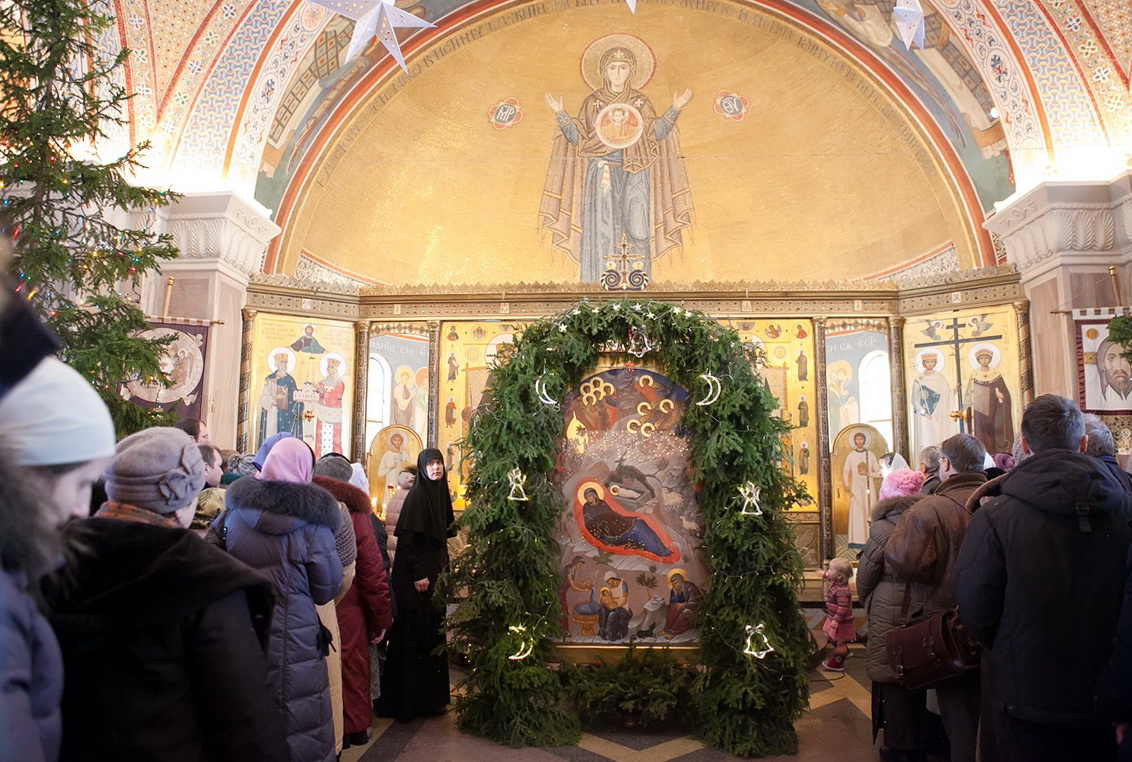
Fathom this: the most powerful being in the universe chooses to enter our world not in a palace, not with an army, not even in a proper hospital bed – but in a cave used for animals, placed in a feeding trough, completely dependent on a young mother to keep him alive. For Orthodox Christians, this is the beginning of the most radical revolution ever attempted: God’s campaign to heal the broken connection between heaven and earth. But here is what makes it different from every other power struggle you have ever heard about – the weapons are backwards, the strategy seems insane, and the general refuses to force anyone to join.
For Orthodox Christians, icons are more than art – they are powerful tools, windows on theology. Look at the ancient icon of the Nativity, and you will see the whole cosmic drama laid out like a map of this upside-down revolution. At the centre lies a baby wrapped so tightly in swaddling clothes he cannot even move his arms – the same arms that Orthodox believers say shaped galaxies. "He who wraps himself in light as with a garment," as Psalm 104:2 describes God, now needs humans to wrap him in cloth strips just to stay warm.
This is the first weapon in God’s arsenal: absolute vulnerability. In our world, power means independence. The wealthy build walls, hire security, never depend on anyone. But here is the Creator of the universe letting himself be bathed by two women Joseph brought along, as the icon shows – as helpless as any newborn you have ever seen. The strongest being chose weakness as his opening move.
The second weapon? Location, location, location – but not the kind estate agents recommend. While Caesar Augustus ruled from Rome’s marble halls, Jesus chose a cave outside Bethlehem because, as Luke 2:7 tells us, "there was no room for them in the inn". The icon shows this cave as a dark void in the mountain, the kind of place you would store animals and tools.
God’s answer to human pride – which first broke our connection to the divine when we decided we knew better than our Creator – was not to thunder from above but to start lower than anyone. As Paul would later write to the Philippians (2:7–8), Jesus "emptied himself" and "humbled himself".
Every ruler in history demanded submission through force. This king issued invitations instead. Look who shows up in the icon’s narrative: not the religious elite, not the powerful. The shepherds – night-shift workers, the ancient equivalent of minimum-wage security guards – get the first announcement. "Do not be afraid," the angel tells them (Luke 2:10), "I bring you good news of great joy." No forcing, no threats, just an invitation to come and see.
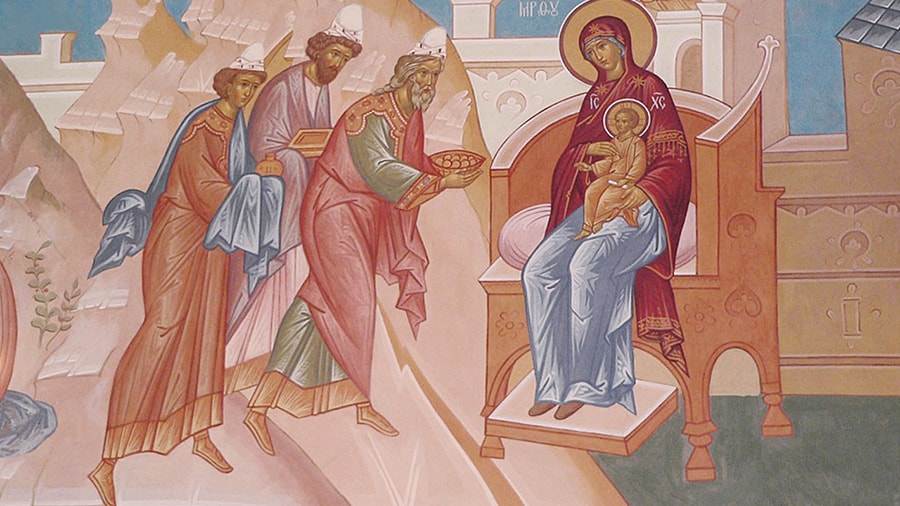
The Wise Men, shown in the icon as different ages (one young without a beard, one old with flowing hair), followed a star across hundreds of miles. Nobody made them come. The star – that bright line in the icon pointing to the cave – did not compel; it simply shone, and they chose to follow. "We saw his star in the east and have come to worship him" (Matthew 2:2), they tell Herod, moved not by fear but by wonder.
Meanwhile, where were the religious authorities? The chief priests and scribes knew exactly where the Messiah would be born – they tell Herod it is Bethlehem, citing the prophet Micah (Matthew 2:4–6). They had all the right information but could not be bothered to walk five miles to investigate. Pride and indifference, the icon suggests, are sometimes stronger chains than ignorance.
And then there is Herod, using the only tools earthly power knows: deception, surveillance, violence. Matthew 2:16 records his response when the Wise Men do not report back: he orders the murder of all boys under two in Bethlehem. Here is earthly power showing its true face – paranoid, brutal, willing to kill children to maintain control. But the family has already fled to Egypt, warned in a dream. The light moves faster than the darkness can follow.
The Orthodox see in this a pattern that runs through all of Christ’s life: evil rages, schemes, deploys its weapons, but somehow keeps defeating itself. The darkness, as John 1:5 puts it, "could not overcome" the light.
In the icon tradition, Satan often appears as an old man. In this icon, we see this man whispering to Joseph in the corner, trying to convince him the virgin birth is impossible, that he is a fool for believing. This is every voice – external or internal – that tells you transformative love is impossible, that vulnerability is stupidity, that humility is weakness, that you are an idiot for believing things could be different.
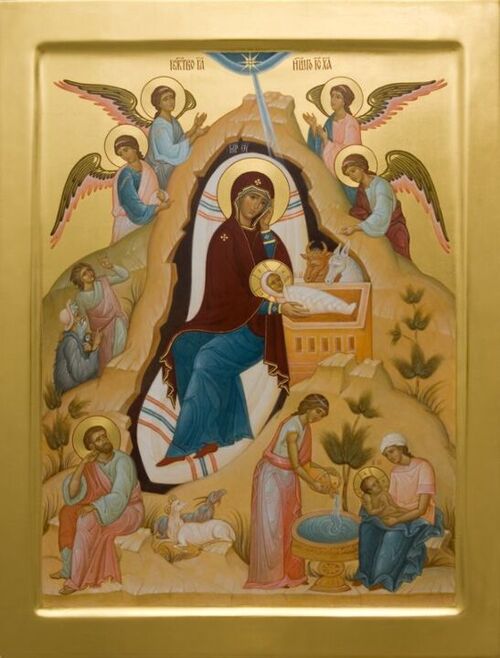
Icon of The Nativity of Christ painted in St Elisabeth Convent*
But Joseph stays. The shepherds come. The Wise Men kneel. Mary holds the infant who holds the universe.
This is why Orthodox Christians say Christmas joy is "beyond this world" – it operates on entirely different physics. In our reality, the powerful crush the weak. In this invasion from beyond, weakness becomes the ultimate strength. In our world, you climb by pushing others down. In this revolution, the king starts at the bottom and invites everyone to rise. Every earthly revolution promises change through force and delivers only new oppressors. This revolution of the Nativity promises transformation through invitation and vulnerability. It does not demand you believe – it simply presents a baby in a feeding trough and asks, "What if power is not what you think it is?"
The icon ends with all creation participating: angels singing, stars pointing, earth providing the cave, humanity offering the Virgin, animals watching, shepherds wondering, Wise Men journeying. Everyone and everything is given a part to play, but no one is forced to play it. The light still shines in the darkness. And the darkness still has not figured out how to overcome it.
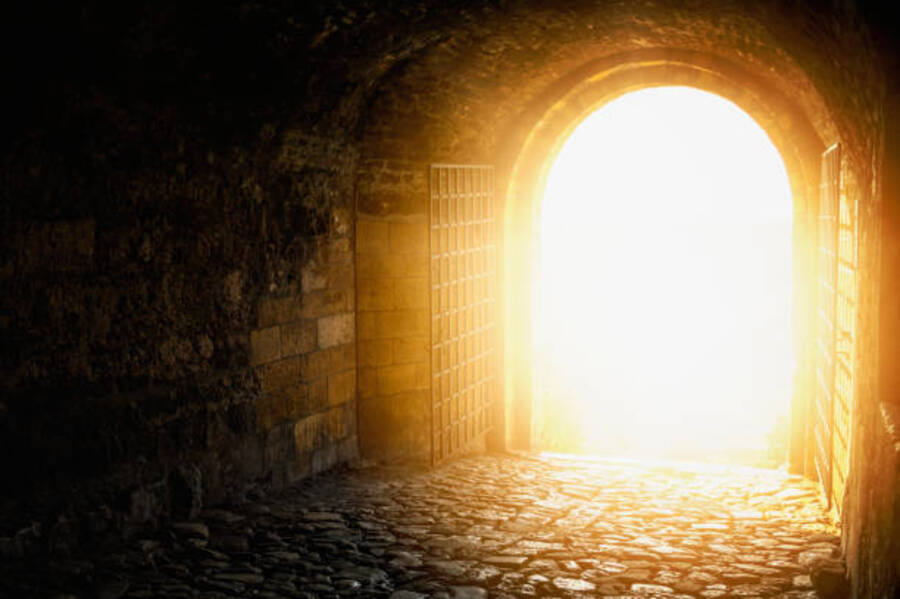
For Orthodox Christians, the Nativity is not some distant theological concept; it is a reality that transforms broken lives today, just as it has for centuries.
Consider Michael Henchard, Thomas Hardy’s tragic Mayor of Casterbridge – a man who sold his wife and daughter in a fit of drunkenness, then spent decades building respectability only to watch it crumble under the weight of his past. Hardy painted him as irredeemable, crushed by his fate. Yet the Nativity rewrites even this story. Imagine the Christ child in Bethlehem’s manger – He does not arrive with a ledger of Henchard’s sins or demands for explanation. Instead, there is simply a voice in the darkness: "There is room for you. The door is open. Come."
This is what St Paul meant when he wrote, "Where sin abounded, grace abounded much more" (Romans 5:20). The stable had room for shepherds – society’s outcasts – and for magi, foreign seekers. There was room then; there is room now. For the one who has betrayed every trust. For Michael Henchard. For you.
Charles Dickens understood this transformative power intimately through Ebenezer Scrooge, whose story resembles many modern lives. Scrooge had lost his beloved sister, watched his fiancée leave him, and built walls of cynicism so thick that he declared Christmas itself "a humbug" – a fiction, a delusion. Sound familiar? How many of us, wounded by loss, by betrayal, by the world’s harshness, have decided we are unworthy of joy? How many have looked at religious celebration and thought, "That is for other people, better people"?
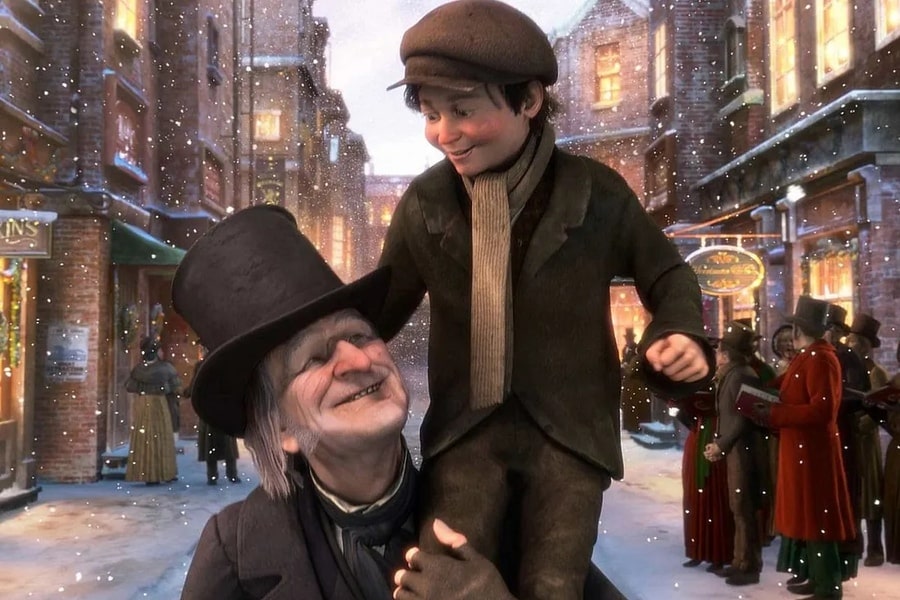
Yet notice how Scrooge’s transformation happens: not through force or argument, but through self-emptying love. The Ghost of Christmas Present does not debate; he simply reveals. Tiny Tim does not condemn; he blesses. Bob Cratchit does not retaliate; he toasts his miserly employer’s health. These are Christ’s own weapons: meekness, vulnerability, persistent love. As Dickens himself wrote of Christmas: "It is good to be children sometimes, and never better than at Christmas, when its mighty Founder was an infant himself."
This childlike vulnerability – God as an infant requiring human care – shatters our defensive armour. The same power that melted Scrooge’s frozen heart two centuries ago works today. That young woman who cannot go home because she has disappointed everyone. That man who has made mistakes that feel unforgivable. The Nativity says: "God became weak so you could be strong. God became small so your life could become large with meaning."
The Orthodox Church conveys this mystery in one of its most beloved Nativity hymns:
Today the Virgin gives birth to the Transcendent One,
And the earth offers a cave to the Unapproachable One.
Angels with shepherds glorify Him;
The wise men journey with a star,
Since for our sake the eternal God was born as a little child.
"For our sake" – not despite our failures, but because of them. As Jesus would later say, "I have not come to call the righteous, but sinners to repentance" (Luke 5:32). The door that opens at the Nativity does not lead to a courtroom but to a nursery. Not to judgement but to joy beyond this world – joy that transforms Michael Henchard’s despair, Scrooge’s bitterness, and yes, our own modern emptiness into something luminous and eternal.
The stable door stands open still. There is room for you. Come.